
COB vs SMD LEDs: what's the real difference?
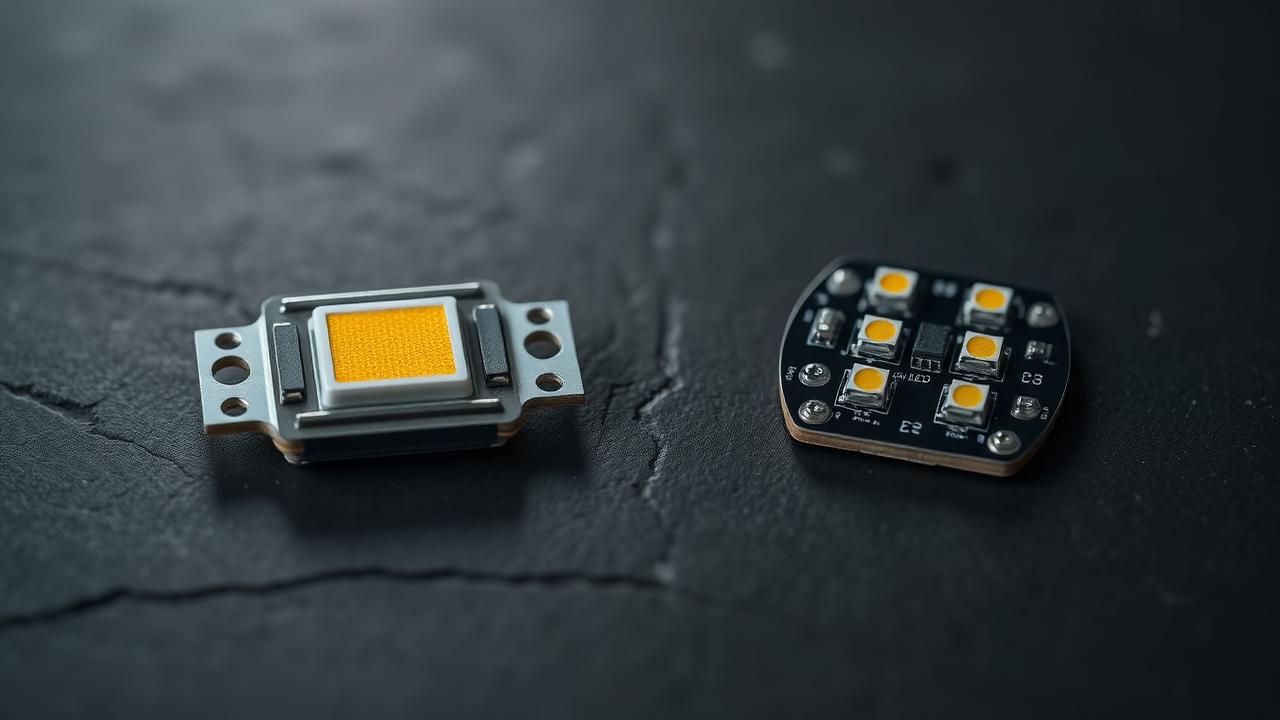
Nearly every LED fixture you buy uses one of two chip architectures: COB (chip on board) or SMD (surface mounted device). They are not interchangeable, and picking the wrong one is the most common reason a room feels either glary or washed out.
COB — one dense light source
Dozens of diodes sit on a single substrate and share one phosphor layer, so the output reads as a single crisp point of light. That gives excellent beam control, higher contrast and better colour rendering — ideal for spotlights, downlights and accent lighting.
SMD — many small sources
Individual diodes are mounted across a board, spreading light over a wider area with softer shadows. This is what you want in panel lights, tube lights, battens and street lighting where uniformity matters more than punch.
Quick comparison
- Beam control: COB wins — tight, well-defined beams.
- Uniformity: SMD wins — no hotspots across large surfaces.
- Heat: COB concentrates heat, so heat-sink quality matters more.
- Colour consistency: COB typically holds tighter colour binning.
How to choose
Use COB where you want the eye to land — art walls, kitchen islands, retail displays. Use SMD where you want light to be felt but not noticed — offices, corridors, false-ceiling panels.